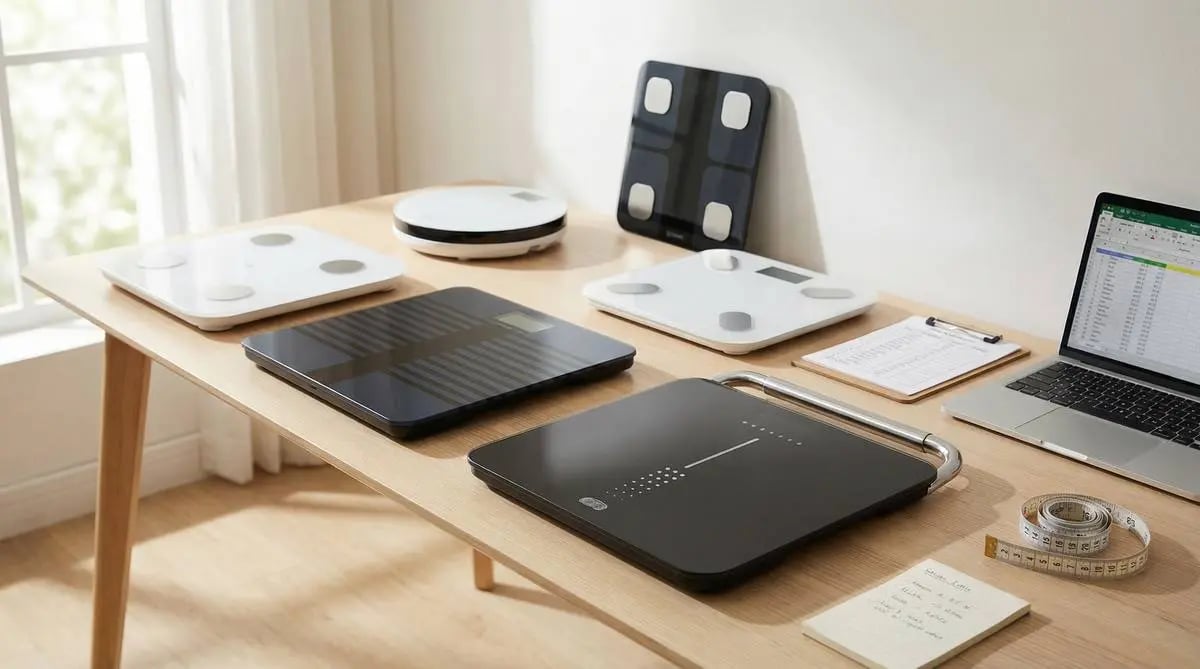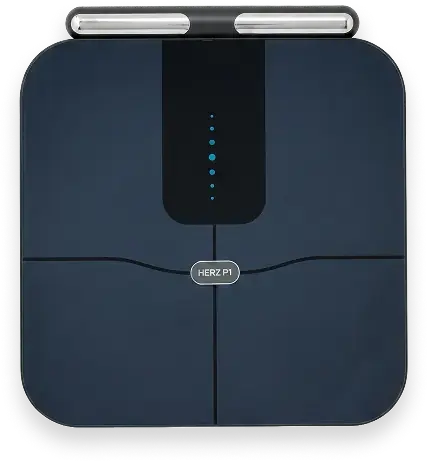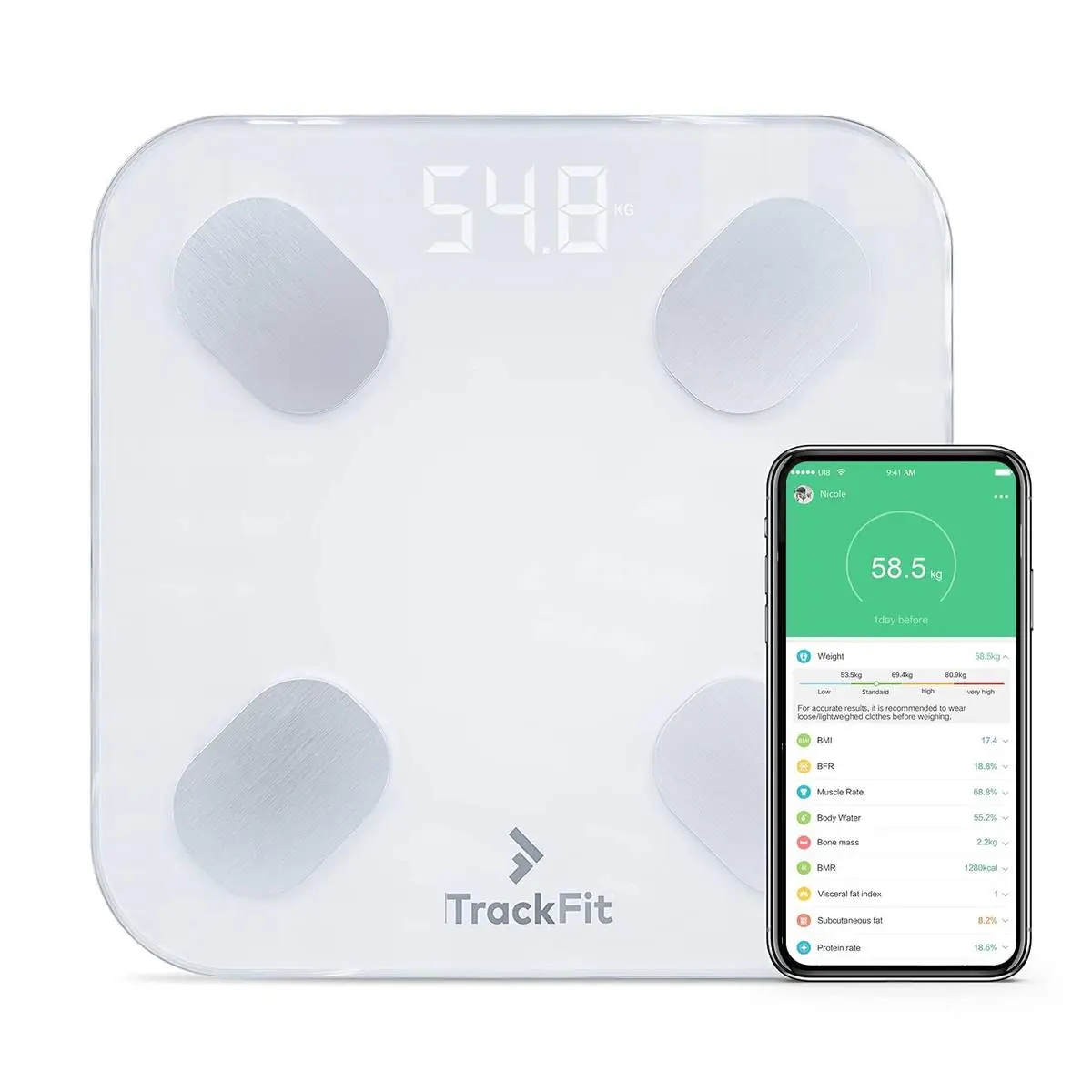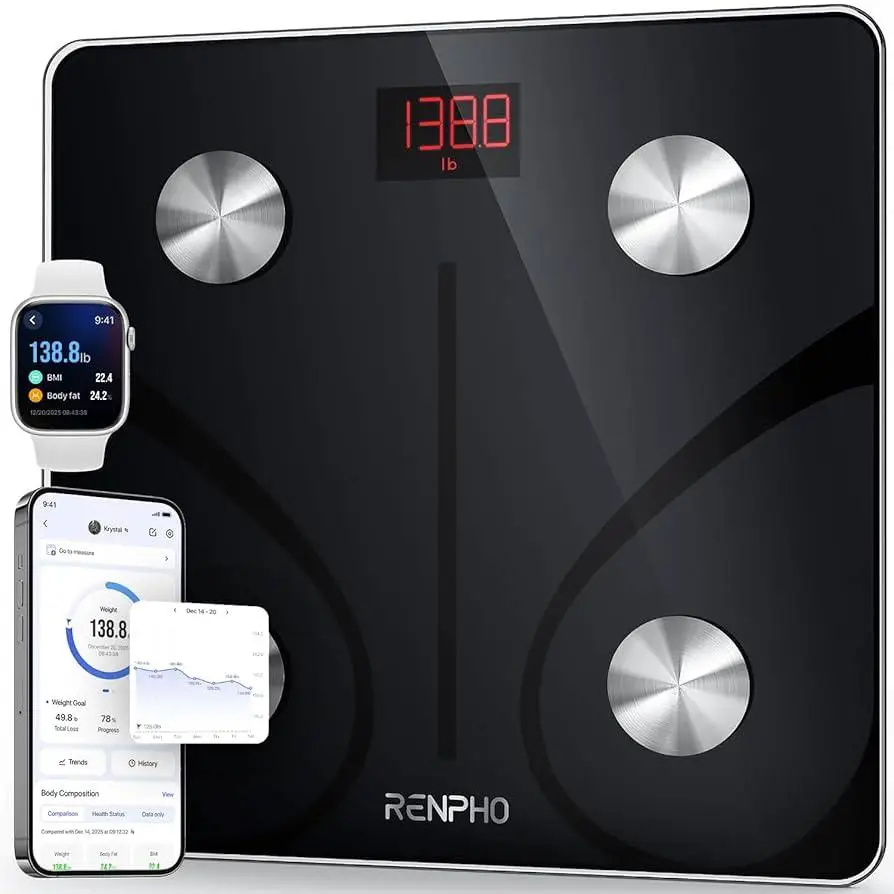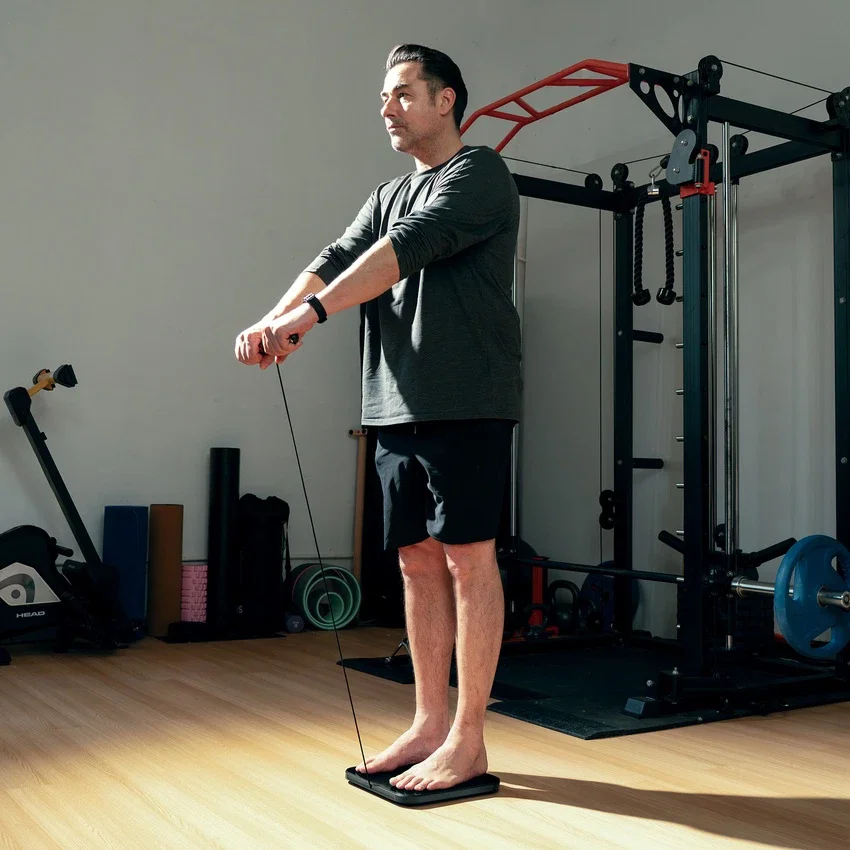
Three weeks into testing, one of our testers — a 54-year-old who had been told by her doctor to monitor her visceral fat — stepped on the Renpho Smart Scale and got a body fat percentage. She stepped on the Herz P1 and got a visceral fat rating, a metabolic age, a resting heart rate, and a breakdown of muscle mass in her left arm, right arm, and trunk. Same morning. Same person. The difference wasn't just in the number of metrics. It was in the clinical relevance of what was being measured.
Among All the Scales We Tested, One Actually Measured the Whole Body
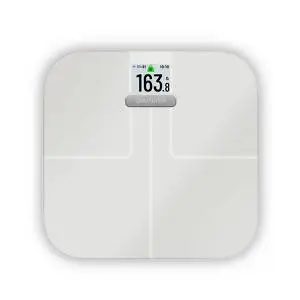
That's the core story of our 8-week test. The smart scale market has a dirty secret: most scales are measuring the same thing (leg-to-leg impedance) and calling it different things (body fat %, muscle mass, hydration level). The Herz P1 is one of the very few home scales that actually changes the measurement architecture — adding a retractable handle with 4 additional electrodes to create a genuine upper-body scan loop. Our DEXA comparison confirmed it: the Herz P1 returned arm and trunk muscle mass readings within 3% of the DEXA baseline. The Garmin Index S2, which uses 4 foot electrodes only, was off by 11-14% on the same metrics.
How We Tested: DEXA Baseline, 6 Testers, 8 Weeks
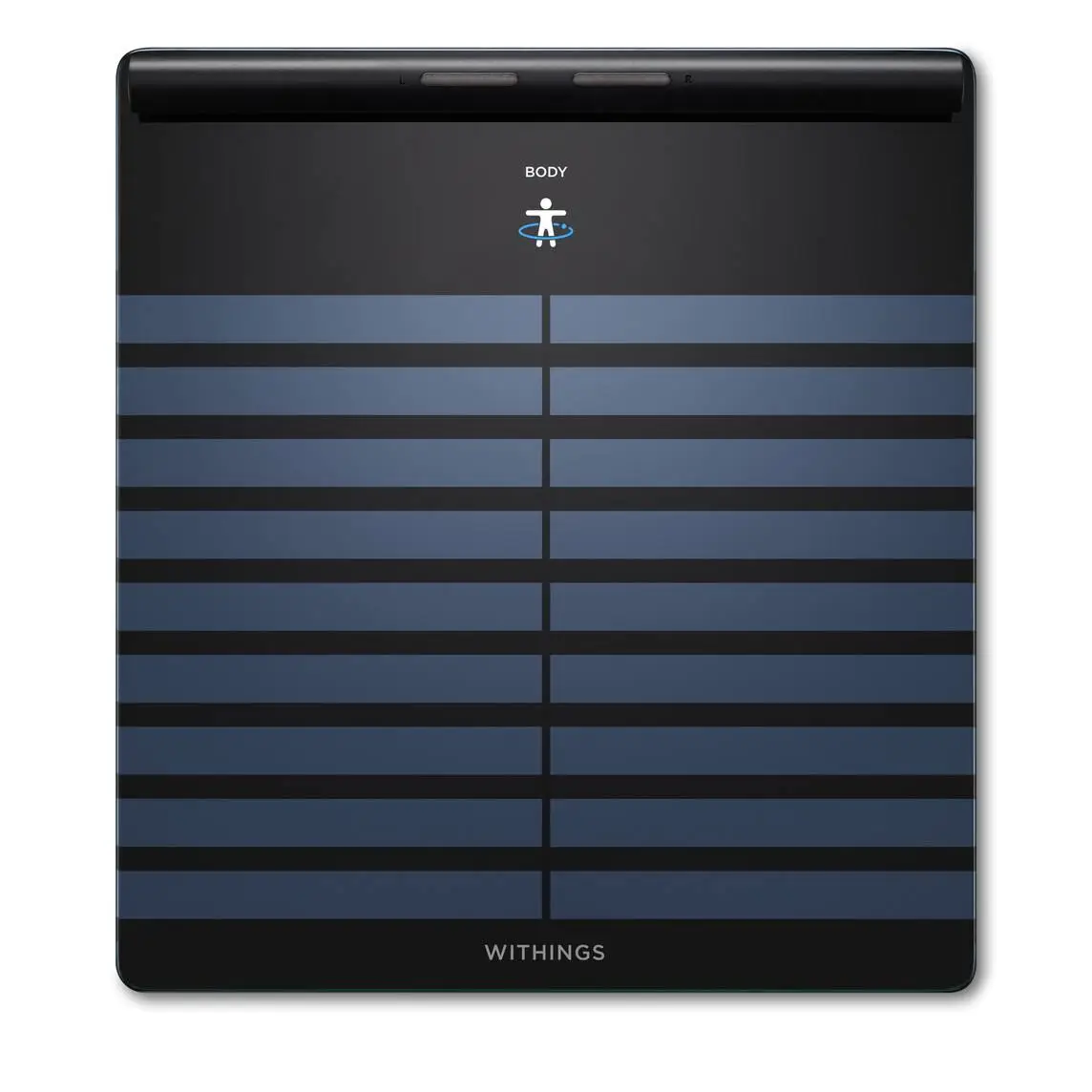
The Withings Body Scan is the most credible alternative we tested. It's a well-built scale with 6 electrodes and a genuinely useful nerve conduction velocity feature. But the subscription model is a deal-breaker for many buyers — you end up paying an ongoing monthly fee just to access the metrics you already paid a premium price to unlock. The Herz P1 includes all 56 clinical metrics with no ongoing cost. For a product you're going to use every day for years, that's a meaningful difference.
Why the Herz P1 Won: The Upper Body Problem Every Other Scale Ignores
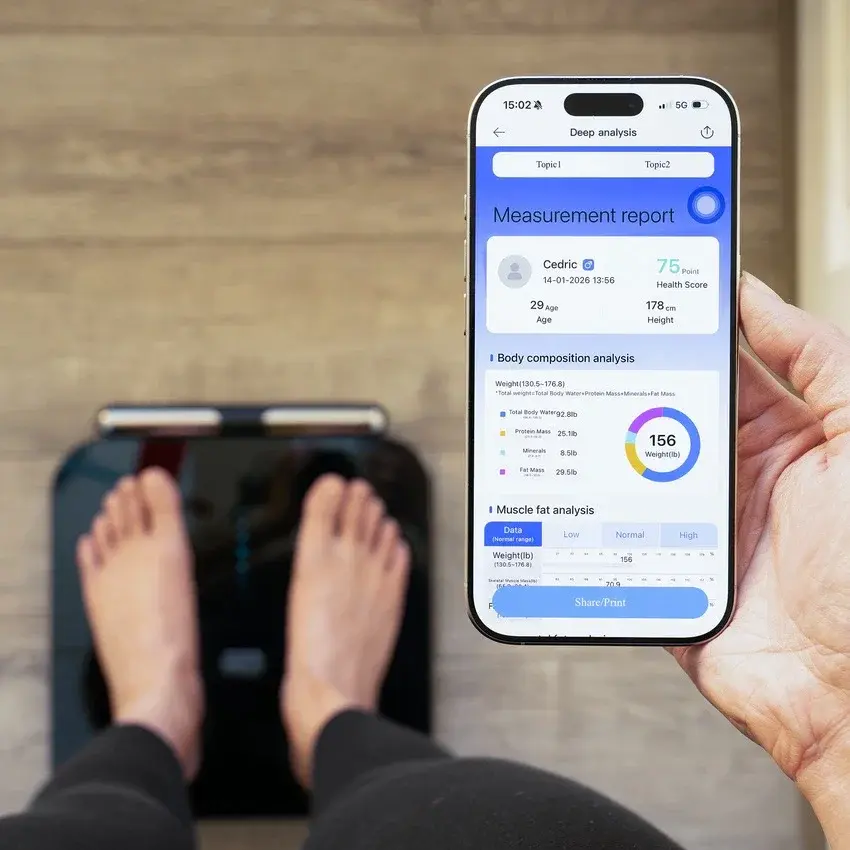
The 76mm LED display was a practical detail that mattered more than we expected. By week four, every tester had stopped opening the competing scale apps. The Herz P1's on-scale display showed weight, body fat, and muscle rate immediately after each measurement. No phone, no app, no waiting. The 6-month battery life meant we charged it once during the entire 8-week test. These are small things, but they're the difference between a scale you use every day and one that ends up in a closet.